




Central pricing strategies fall apart at the shelf if stores can’t execute cleanly. The future is policy-driven pricing where rules, not people, control price expression locally and at speed, says Finn Wikander, Chief Product Officer at Pricer.
Retail pricing is a structure built on consistency, control and the assumption that retail conditions are stable enough for pricing decisions made centrally to remain relevant by the time they reach the shop floor. However, that model is now under growing pressure.
Strategic pricing is as important as ever but the speed and complexity of retail trading have outgrown the operational mechanics that support it. Consumer demand shifts faster, local competition moves more aggressively, stock positions change by the hour rather than the week and margin pressure has become more acute in almost every retail category.
Yet many retailers still operate with pricing processes designed for a slower era, where decisions are made centrally in fixed cycles and then pushed downstream into stores that are expected to execute uniformly regardless of local conditions. The limitation of head office is that the further away pricing decisions are made from the point of purchase, the more vulnerable they are to becoming disconnected from reality which lives at the shelf.
That is the point where a customer makes a value judgement. It is where product availability, competitor positioning, promotional messaging local demand patterns and margin pressures all collide in real time. It is also the point where even the most carefully planned pricing strategy can either convert or fail. A price only matters when it is encountered by a customer, and by that point conditions may have changed dramatically from when it was first set.
Head office will not disappear from pricing, far from it. Strategic pricing, supplier collaboration, margin planning and category leadership will remain critical functions. But the nature of that role is changing. Instead of defining fixed price points for stores to implement, head office will increasingly define the rules, thresholds and commercial boundaries within which prices can move dynamically based on live trading conditions.
In practical terms, this means replacing rigid instructions with governed logic. Instead of saying this item is £3.99 in every store for the next seven days, retailers will increasingly build pricing frameworks based on live variables and automated triggers. If local sell-through is significantly ahead of forecast, prices may hold to protect margin. If waste risk rises in fresh categories, markdown logic may accelerate automatically. If a nearby competitor adjusts a key value line, local pricing can respond within pre-approved margin tolerances. If stock availability drops below threshold, promotional pricing can be paused to protect availability and profitability.
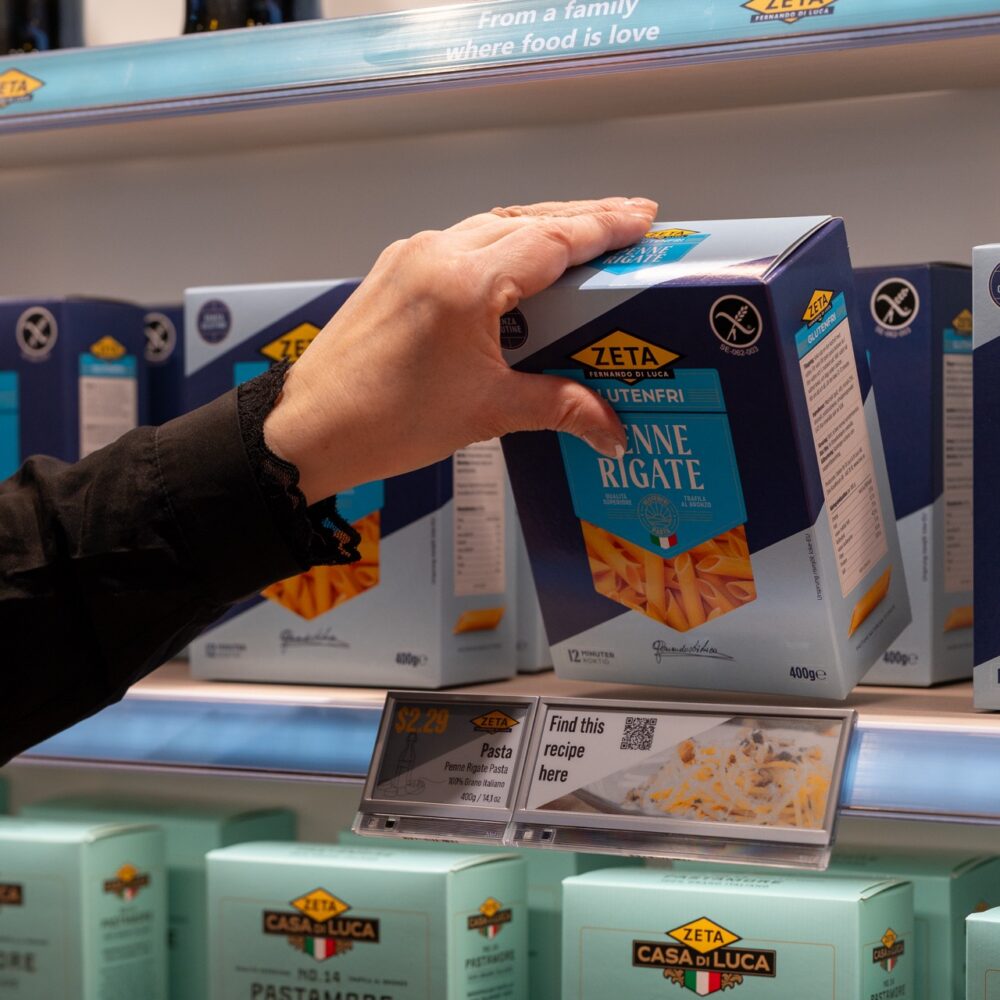
The critical enabler of this change is the infrastructure at the shelf edge, specifically Electronic Shelf Labels (ESLs) and in fact the digital shelf edge is becoming one of the most strategic assets in retail. If pricing is going to become more local, more responsive and more immediate, retailers need an execution layer capable of translating pricing logic into customer-facing reality instantly and accurately.
In a market where pricing decisions can no longer wait for overnight updates or weekly store visits, latency becomes expensive. A delayed markdown in fresh food may result in avoidable waste. A competitor price shift not matched quickly enough can create immediate volume loss. A promotion that launches inconsistently across locations can erode margin and undermine customer trust.
In addition to speed, retailers need to address local relevance, which shows up one of the enduring flaws in central pricing; the assumption that stores are operationally similar enough to justify uniform price expression. For sure, retailers have spent years building increasingly sophisticated local assortment strategies but still treat pricing as nationally uniform.
Traditionally, supplier-retailer pricing relationships have been built around fixed negotiation cycles and planned promotional calendars. Increasingly, that model will evolve towards collaborative pricing frameworks where supplier funding, promotional support and margin-sharing agreements are structured to flex in response to real-world trading conditions.
That creates a more fluid and commercially intelligent relationship, where both retailer and supplier respond to live market performance rather than relying entirely on static pre-planning.
Artificial intelligence will accelerate this transition, by improving the speed and quality of pricing decisions. AI will become the layer that interprets shelf-level data, identifies demand signals, detects elasticity changes, forecasts promotional impact and optimises markdown timing faster than pricing teams ever could manually. It will identify local patterns that would otherwise remain invisible and recommend interventions based on actual trading conditions rather than assumptions.
The goal is a single, connected system that embraces promotional activation, retail media, sustainability communication, product provenance, compliance messaging and inventory prioritisation, all of which depend on the same point of interaction, the shelf.
In the future, head office will not disappear, but its role will fundamentally shift from issuing pricing instructions to architecting the frameworks that govern how price moves, while the final expression of price increasingly happens at the shelf itself, where retail conditions are most visible and where value is ultimately judged by the customer.
The post The End of Head Office Pricing appeared first on 365 Retail – Retail News and Events.