



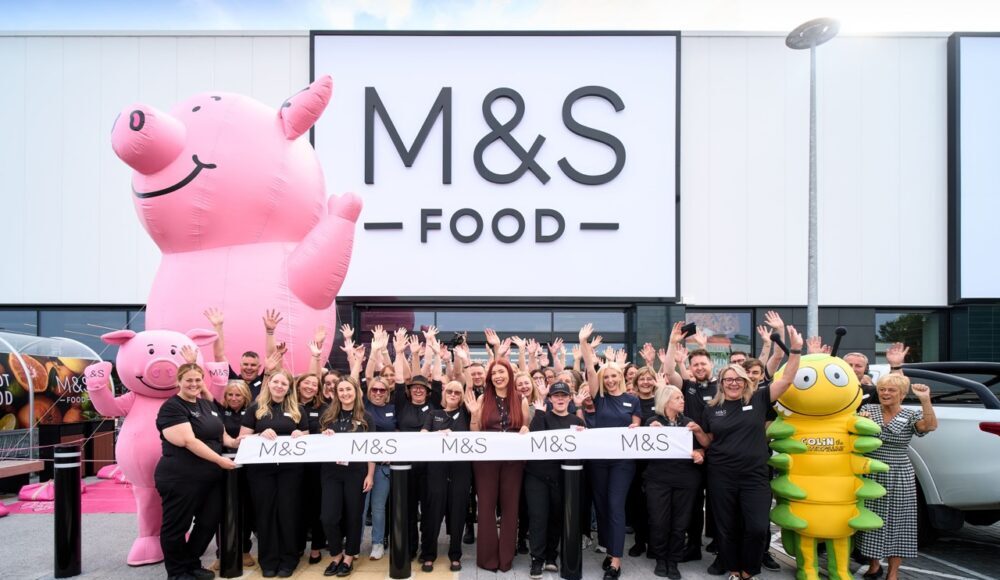

M&S’s new Weymouth store and its renewed Pantheon flagship on Oxford Street illustrate two very different approaches to physical retail.
One is a large retail-park relocation built around parking, food, fashion and collection services. The other is an established central London flagship where M&S is testing new layouts, merchandising ideas and customer-service features.
They are not the retailer’s only store models. Instead, the two projects offer a useful view of a wider, multi-format strategy in which location, catchment, available space and the purpose of the shopping trip shape each store.
That approach is becoming increasingly visible across the M&S estate. The retailer is investing in full-line stores, Food branches, convenience locations, extensions and renewals rather than applying one standard format to every market.
Weymouth Moves to a Larger Site
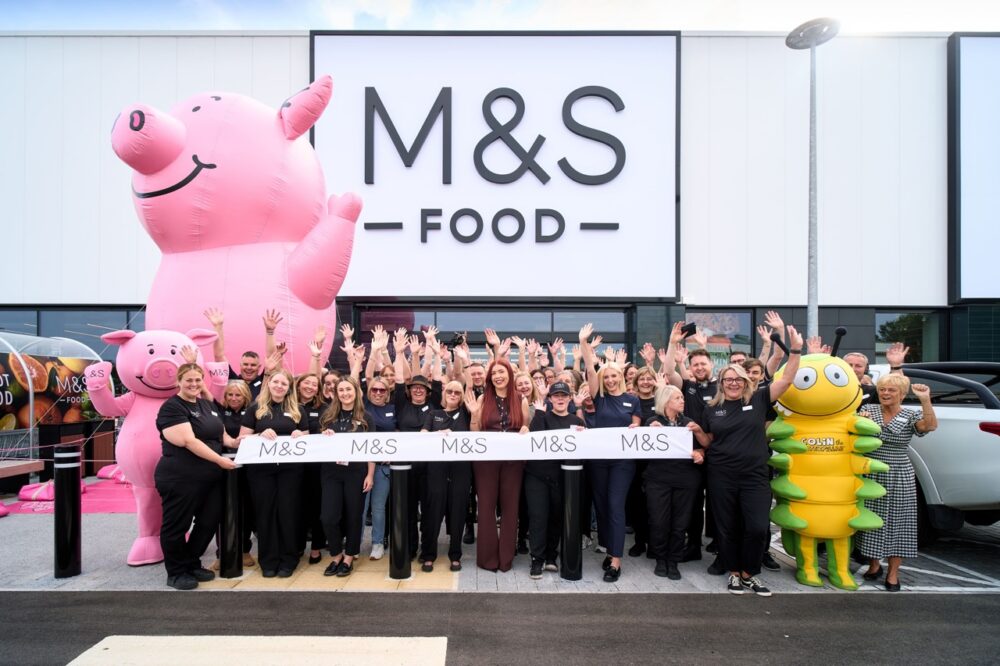
The new M&S Weymouth Gateway store opened on Wednesday 15 July 2026 at 10–12 Souter Way, replacing the retailer’s former branch on St Mary Street.
M&S said all colleagues from the town-centre store had transferred to the new location, while more than 70 additional jobs had been created.
The foodhall includes an in-store bakery and coffee counter, a hot chicken counter, gluten-free and organic sections, and dedicated flower and wine areas.
The wider store offers womenswear ranges including Goodmove and Per Una, alongside denim, lingerie and menswear. Customers can also collect fashion, home and beauty orders placed online from a dedicated Click & Collect point.
Customer parking, Scan & Shop, fitting rooms and self-service collection and returns kiosks are among the services available at the branch.
The completed store is more than twice the size of its St Mary Street predecessor. LondonMetric’s Weymouth development case study describes the M&S unit as the final phase of a wider convenience development that also includes Aldi, Dunelm, B&M, McDonald’s and Costa.
The additional space allows M&S to bring a broader mix of food, fashion and services together at one location.
The move reflects the practical role of many larger retail-park stores. Parking, weekly food shopping, longer visits and online collection services can often be accommodated more easily than at constrained town-centre sites.
Pantheon Serves a Different Purpose
Two days before the Weymouth opening, M&S completed the renewal of its Pantheon flagship on Oxford Street.
The renewed Pantheon store covers almost 100,000 sq ft across four floors and brings together Food, Fashion, Home and Beauty.
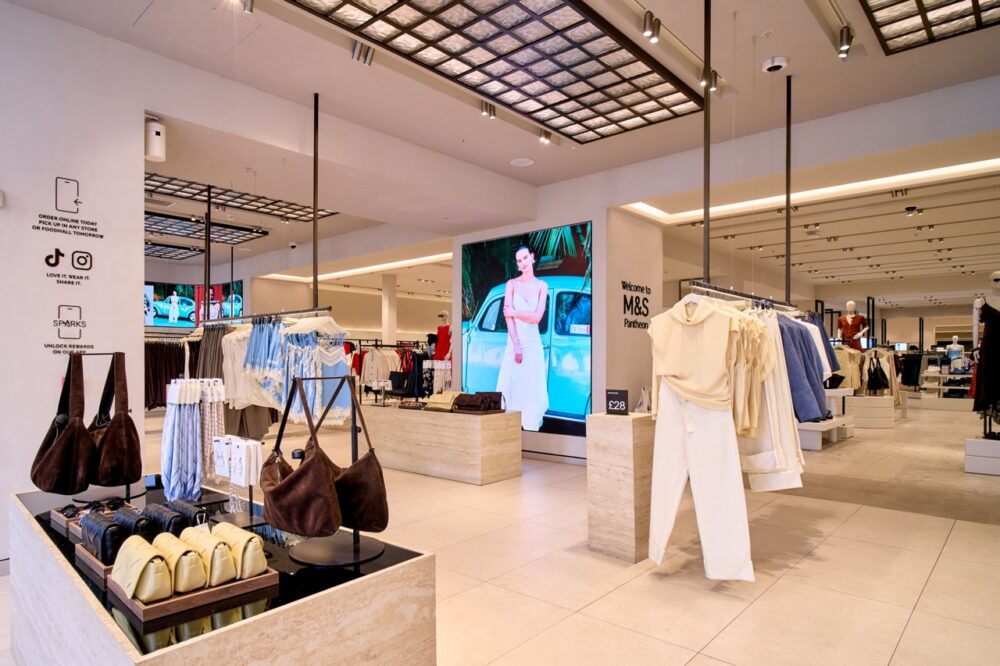
Its role extends beyond serving shoppers in central London. M&S is using the renewed Fashion, Home and Beauty floors to test ideas that could later be introduced across other parts of the estate.
Changes include clearer product zoning, dedicated rooms, ambient lighting, digital displays and updated payment, collection and service areas. The store also includes made-to-order menswear suiting, dedicated lingerie and babywear rooms, a Beauty Hall and a homeware section developed with interior designer Kelly Hoppen.
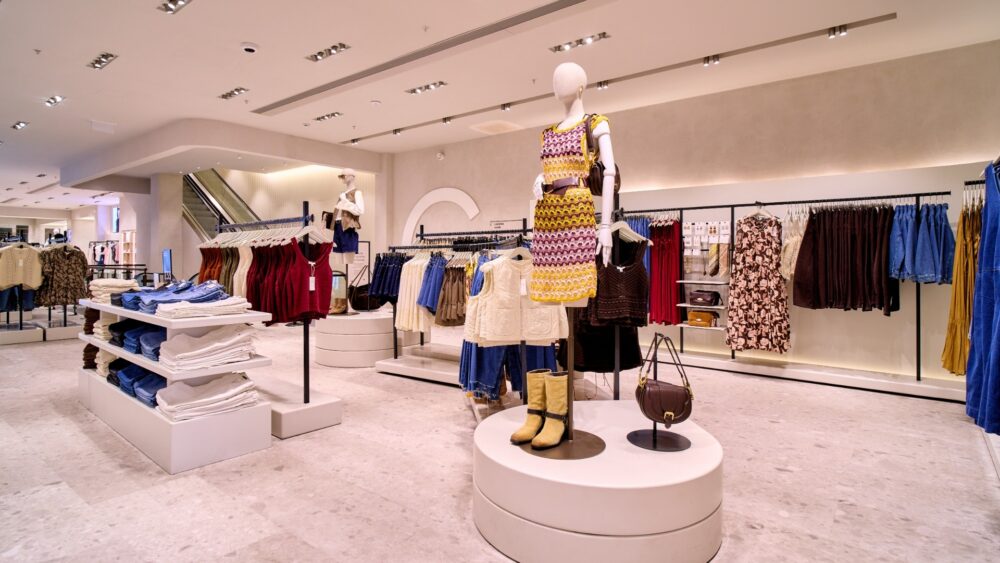
Pantheon is therefore part flagship and part development site. It gives M&S a large, high-profile setting in which to assess how changes to design, merchandising and service work with customers.
That is a different task from the one assigned to Weymouth Gateway. The Dorset store is built around access, range and practical services for its local and regional catchment. Pantheon combines a major shopping destination with a test-and-learn role for the wider business.
A Strategy Shaped by Location
The contrast between Weymouth and Pantheon shows why M&S’s estate programme cannot be described simply as a move away from high streets.
The retailer is investing in an Oxford Street flagship at the same time as relocating its Weymouth operation to a larger out-of-town site. It has also opened full-line stores in city-centre and shopping-centre locations while expanding its Food and convenience estate.
Rather than favouring one type of property, M&S is matching formats to individual markets.
A central London flagship must manage high footfall, several departments and a customer journey spread across multiple floors. A retail-park store such as Weymouth needs to combine broad ranges with parking, food shopping and collection services.
Smaller Food stores and transport-hub branches serve a different purpose again, with greater emphasis on convenience, frequency and speed. M&S has previously described the variety of formats within its London estate as serving different shopping missions, from full-line shopping to food on the move.
The common thread is not the building type. It is the attempt to place the right combination of space, products and services in each location.
The Town-Centre Question
For Weymouth, the benefits of a larger store also come with a clear local trade-off. M&S has gained more space and customer parking, but its departure has removed an established retailer from St Mary Street.
That tension formed part of the planning debate reported by ITV News.
Some councillors expressed concern about the loss of businesses from central Weymouth. Others highlighted the Gateway site’s transport connections and its potential to attract shoppers from a wider area.
The development included parking, electric-vehicle charging, cycle facilities and landscaping, while M&S presented the proposed branch as a full-range replacement store.
The relocation reflects a challenge faced by many towns. Larger sites can give retailers more room for product ranges, food offers and online services, but the departure of a major name can also change footfall and shopping patterns in the centre.
For M&S, Weymouth Gateway provides the space to bring more of its offer together. For St Mary Street, attention will turn to the future of the former store and the effect of its closure on neighbouring businesses.
Why M&S Continues to Invest in Stores
Store rotation is one of M&S’s three main investment programmes for the 2026/27 financial year, alongside supply-chain modernisation and technology transformation.
In its results for the year ended 28 March 2026, the retailer said capital expenditure would rise to approximately £650 million to £750 million during the year.
About two-thirds of that investment is expected to target the longer-term growth opportunity in the Food business.
The current UK store programme includes two new full-line stores, 18 new Food stores, four extensions and further renewals. Pantheon is one of six M&S stores being renewed in London during the financial year.
Previous investment has produced encouraging results across parts of the estate. In its November 2025 half-year results, M&S said 12 Foodhall renewals opened during the previous year had delivered sales uplifts of about 16% to date.
That figure covered the renewed stores as a group, but it helps explain why physical retail continues to receive a substantial share of the company’s investment.
The programme is not simply about opening more branches. It involves relocating, extending and renewing stores where M&S believes a different size, offer or location will better serve the market.
Weymouth and Pantheon are two contrasting examples of that approach. One is a larger retail-park relocation built around food, fashion, access and convenience. The other is an urban flagship being used to test how design, merchandising and customer service could develop.
Together, they show a multi-format strategy shaped by the needs of individual locations rather than a choice between high streets and retail parks. Its success will be judged store by store, through how well each branch serves its customers and contributes to the performance of the wider M&S estate.
The post M&S Weymouth Opening Shows Multi-Format Store Strategy appeared first on 365 Retail – Retail News and Events.