





There was a time when loyalty was easier to engineer. Collecting points for perks. Discounts. Promotions. For a while, that was enough to bring people back.
In 2025, shoppers are more selective about where they spend their time, not just their money. Walking into a store is a conscious choice, and one that comes with higher expectations. Consumers expect to be hosted and made to feel welcome before any transaction happens. They want to connect with a brand before investing in it.

This shift is quietly changing how loyalty is built, which now forms before the purchase. Today, loyalty is shaped by the way spaces make people feel the moment they step inside.
This is where ‘third spaces’ becomes relevant. Not as a trend or a buzzword, but as a way of designing retail environments that invite people to dwell, return, and build a relationship with a brand over time.
The rise of the ‘third space’ in retail
UK photographer Timothy Soar visited an educational hub in Udaipur called Third Space, he described it as the kind of architecture he travels the world to find: “architecture carved from belief.” It’s a phrase that captures the power of third spaces: environments that sit beyond home and work, designed to inspire connection and a sense of belonging.
What was once a sociological idea is now playing out across retail. Recently, global brands like Uniqlo, Ralph Lauren, Chanel and even Tesla are building coffee shops and lounges in their stores. Turning places of purchase into places people choose to spend their time. It’s where brand loyalty is being quietly brewed.
It’s a fact that’s backed up by this Creator’s Way report, which finds that ‘spaces that encourage lingering and permission to unfold naturally accommodate connection’. Ultimately, when retail spaces are designed to let people slow down and spend time in-store, curiosity is more likely to turn into long-term loyalty.
Rapha – the blueprint for leaning into community
However, it’s important to remember that the notion of brands creating third spaces to connect with their communities existed long before the aforementioned brands started serving coffee.
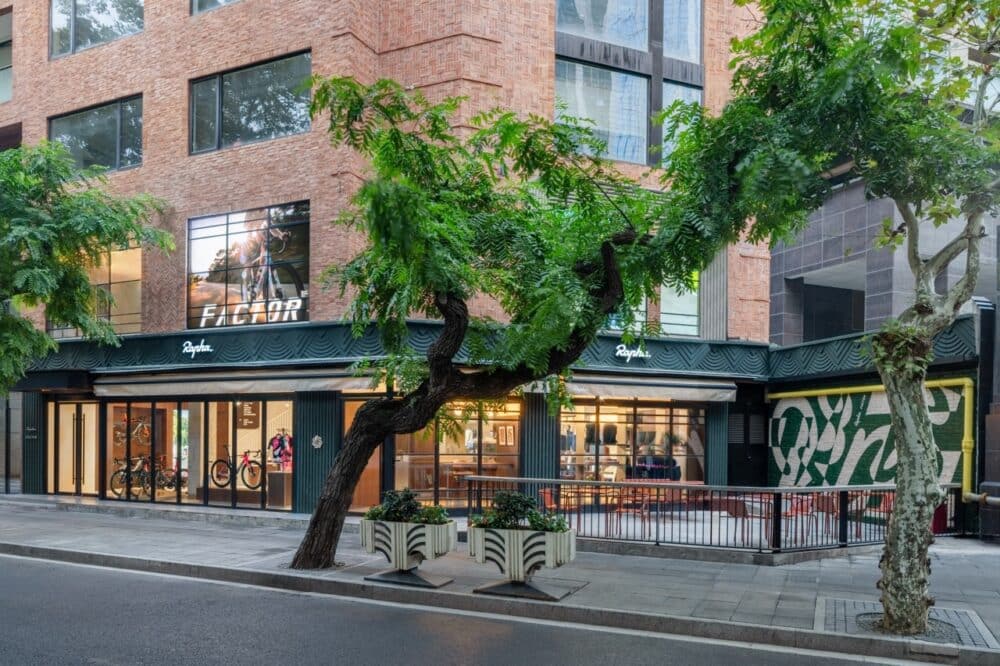
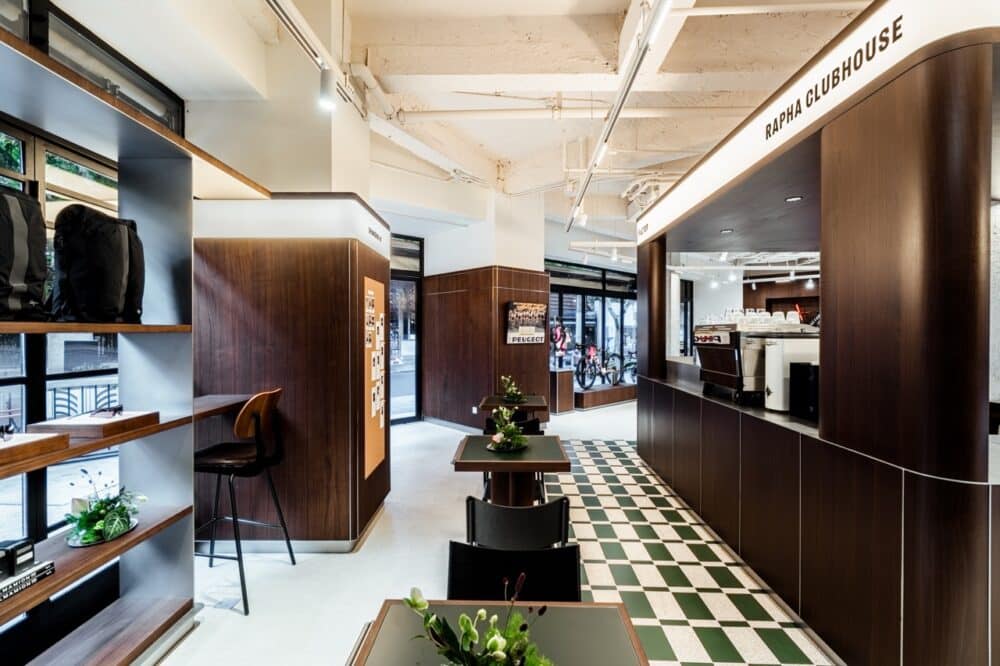
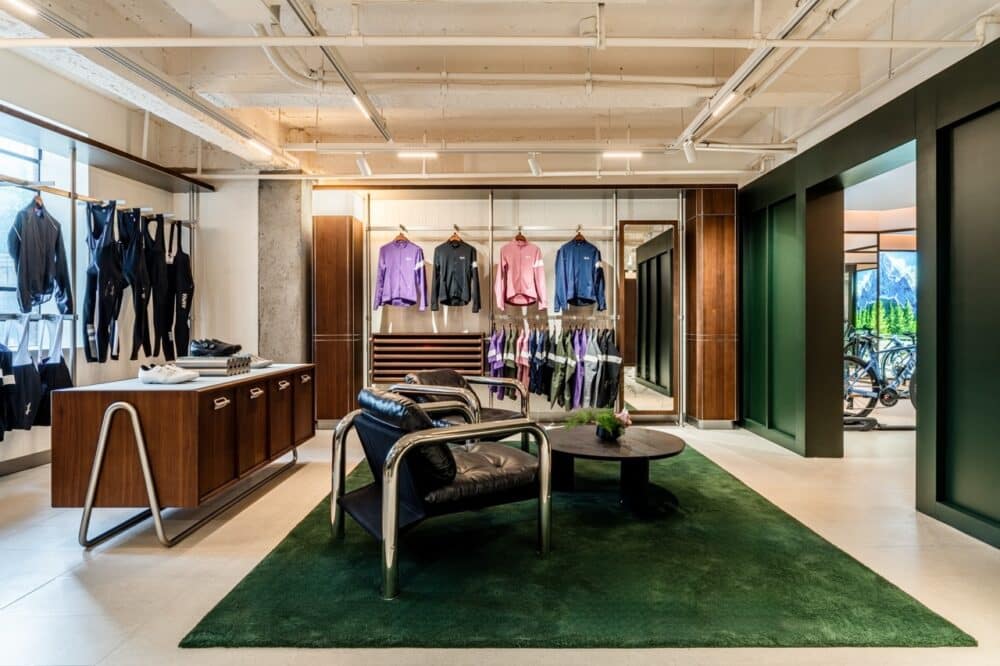
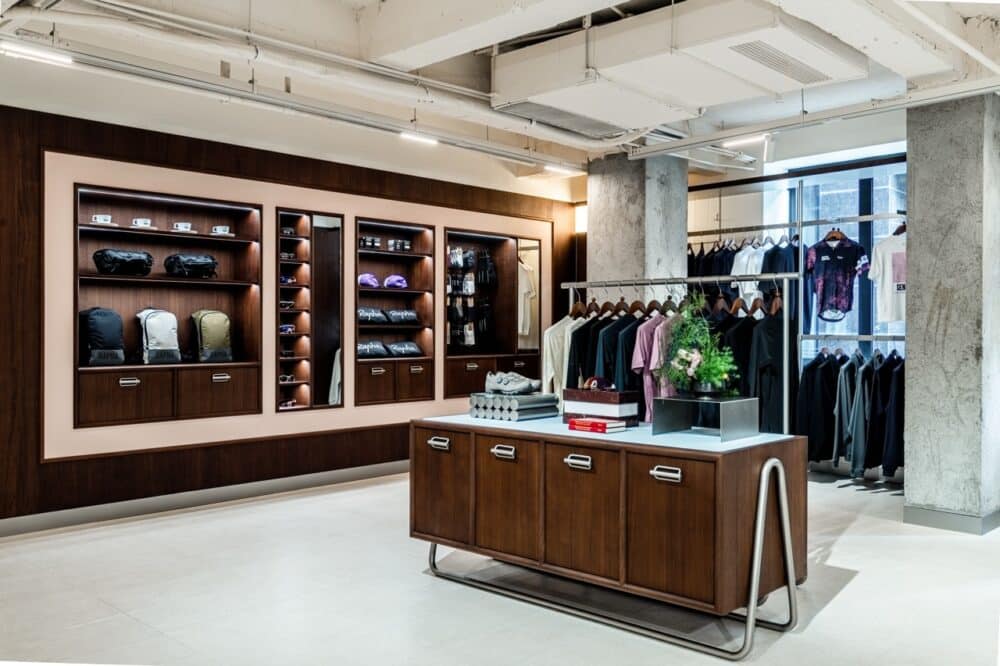
Brands like Rapha have been paving the way in third spaces for over a decade. Rapha’s first Clubhouse opened in 2012, bringing cyclists together in a space that combines retail, café culture and live events. More than a decade on, its newest store in Mainland China continues with this DNA carved years ago, built around bringing its community together.
Each Clubhouse is rooted in its location through Rapha Cycling Club (RCC), with every store given its own iconography. Cyclists can collect marked items with each city’s icon as they travel between Clubhouses around the world, a small but meaningful way of personalising the experience and reinforcing a sense of shared identity across the global community.
While the café sits at the heart of the space, it’s the quieter design details that make it work day to day. The outdoor terrace with a mural created by a local artist and seating where cyclists can sit alongside their bikes, community walls with local ride recommendations, secure indoor racks, tyre pumps and flexible spaces designed to support everything from community talks, product launches, workshops, screenings and group rides.
When you look below the surface, Rapha isn’t selling cycling, it’s creating space for a community to gather in a space around a shared passion.Rapha unapologetically caters to a niche community, but that’s not what makes its Clubhouses effective. What stands out is how clearly the space is designed around cyclists’ needs and routines, whether transactional or experience driven.
Applying the third space mindset
For beauty brands, it could look like carving out space for self-care corners or skincare workshops. For fashion brands, like Levis, it could take the form of repair hubs or personalisation workshops.These spaces work best when they’re genuinely useful, not just visually impressive.
Vans is a great example. The brand, loved by skateboarders since the 90s, tapped into its audience’s passion for skateboarding by designing a skateable ramp in the heart of its concept store in London’s Oxford St. As opposed to just being an aesthetic feature, the ramp is a practical consumer touchpoint which has programmed community building events“used for regular skate lessons, demos and events by the Vans skate team and local skate schools.”
What Rapha and Vans both show is that third spaces don’t need to be complicated. When retail environments are designed around real behaviours and shared passions, loyalty tends to grow naturally, without being engineered.
Spaces carved from belief
It’s important to remember that while third spaces may look like a nice-to-have, it’s a non-negotiable for many young people’s retail playbook. A recent study from American Express found that 80% of Gen Z expect retail destinations to blend shopping with dining, drinking and leisure. And, 60% view retail shopping as a full day out that blends culture and relaxation.
Ultimately, the brands that are succeeding right now are those willing to slow the customer journey down and create places where people are invited to linger, participate and feel seen, rather than rushed through a transaction.
In a retail landscape increasingly defined by sameness, third spaces offer something rarer: belief made physical. Whether through a shared experience or a moment of quiet belonging, these spaces turn brands into hosts and customers into communities. In doing so, they remind us that the most powerful loyalty programs aren’t printed onto points cards once the customers are transacting. They’re designed into spaces before customers ever step foot in.
The post Why Retail Loyalty Is Moving Into the Third Space appeared first on 365 Retail – Retail News and Events.