




In early 2024, global shipping routes shifted almost overnight. After attacks on vessels in the Red Sea, major carriers including Maersk and Hapag-Lloyd diverted ships away from the Suez Canal and around the Cape of Good Hope instead, adding up to two weeks to transit times and driving fuel bills sharply upward.
Then came renewed tensions involving Iran and fresh concerns over the stability of the Strait of Hormuz, a corridor responsible for nearly a fifth of the world’s oil supply. For retailers already dealing with thin margins, fragile consumer confidence and unpredictable demand, this instability has quickly become another operational and financial pressure point.
What is less discussed, and potentially far more transformative, is how these geopolitical shocks are reshaping internal power dynamics inside retail organisations. At the centre of that shift sits an unexpected group: data leaders.
Why data has become retail’s commercial command centre
Disruption is no longer a supply chain issue alone. A shipping delay now triggers a chain reaction across availability, pricing, promotion planning, working capital, replenishment and customer experience. No single commercial function owns the full picture, because the relevant signals sit across fragmented systems, disconnected platforms and inconsistent metrics.
This is precisely why Chief Data Officers and data leadership teams are being pulled into decisions far earlier and far more centrally than before. Their remit is no longer limited to reporting. They are now expected to connect operational signals, surface commercial risks quickly and translate ambiguity into action.
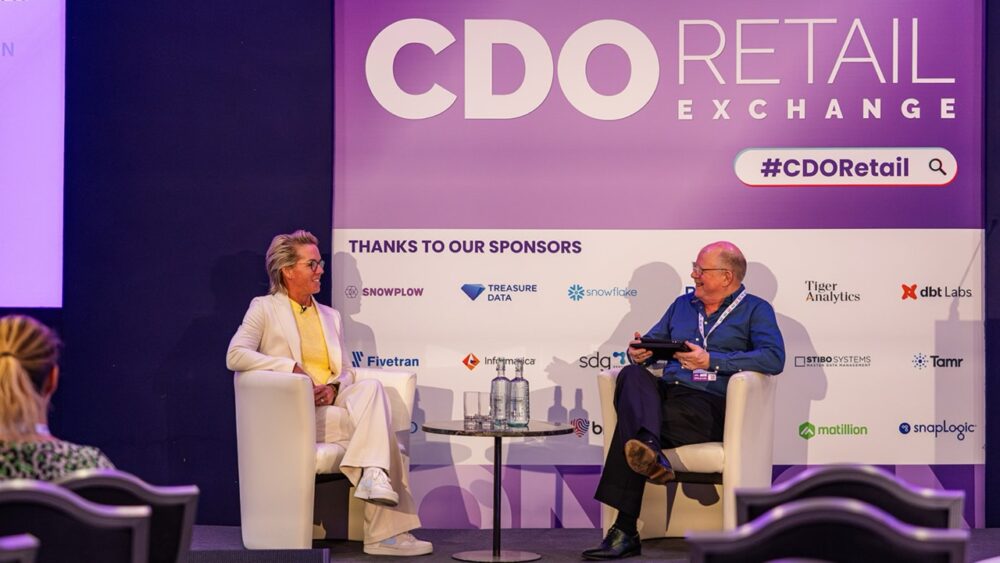
The agenda for the CDO Retail Exchange 2026 reflects this evolution clearly, particularly in its focus on unified data foundations, cross functional orchestration and fast, commercially relevant decision-making. Find out more here.
Fragmented data is now a commercial risk, not a technical one
In recent years, many retailers have felt the consequences of poor visibility. During the pandemic, disconnected systems created dramatic mismatches between supply and demand, with overstocked warehouses in some regions and empty shelves in others. More recent shipping volatility has exposed similar weaknesses, including teams working from different definitions of truth, financial exposure that cannot be reconciled with demand signals, and intelligence that stays trapped inside functions.
The issue is rarely a lack of data. It is the ability to trust it, align around it and operationalise it at speed.
This is why retail leaders are once again emphasising the fundamentals, including reliable data foundations, semantic layers, shared KPIs and clear business ownership. In a disrupted environment, any ambiguity in the numbers quickly becomes a liability.
From hindsight to real time intervention
Retail’s traditional rhythm relied on dashboards, weekly trading updates and retrospective analysis. But volatility moves faster than reporting cycles. By the time a dashboard describes what happened, the conditions have already changed.
This is driving a new wave of interest in real time analytics, conversational interfaces and AI enabled decision tools that allow leaders to interrogate data dynamically rather than passively consuming reports.
The direction of travel is clear. Retailers want to collapse the time between insight and action. This also places pressure on organisations to manage explainability, data quality and trust as AI influences more commercial decisions.
Governance is being reinvented, not removed
Speed without control carries risk. Pricing changes based on unverified data, inventory shifts triggered by flawed forecasts or automated actions taken on misunderstood signals can be costly. Retailers are rethinking governance not as bureaucracy but as an operating system that enables confident decision-making at pace.
The industry is moving toward governance that is embedded, automated and aligned with business workflows. This is a central topic on the CDO Retail Exchange 2026 agenda.
The financial reality: the age of proof of value
With rising costs and unpredictable demand, every investment now competes against immediate commercial pressure. Data and AI programmes are under scrutiny to demonstrate tangible outcomes rather than transformation for its own sake. The question is shifting from “What could we build?” to “What will deliver measurable value this quarter?”
Retailers are focusing on use cases that protect margin, reduce waste, improve forecasting accuracy, strengthen allocation and increase conversion. Adoption, not just capability, is becoming the defining success metric.
A quiet rebalancing of power inside retail organisations
Taken together, these shifts are driving a subtle but unmistakable redistribution of influence. Data leaders are increasingly shaping decisions that once sat solely with merchandising, operations or finance. In some organisations, this shift is formal, with expanded commercial mandates. In others, it is reflected more quietly in who joins strategic discussions and who is expected to provide answers.
Either way, the outcome is the same. The ability to navigate disruption is becoming inseparable from the strength of a retailer’s data leadership.
Rebuilding retail for a volatile future
Even if current geopolitical tensions ease, the structural fragility created by globalised supply chains and real time demand cycles will remain. Retailers cannot rely on predicting disruption. They must focus on responding to it effectively.
This is why the theme of the Chief Data Officer Exchange, Retail 2026 feels so relevant: “Rebuilding Retail: Data Initiatives to Create Commercial Uplift.”
In a market defined by volatility, rebuilding is no longer optional. And data leaders are no longer supporting that process, they’re leading it.
Explore the full event guide here.
The post Retail’s New Frontline: Why Geopolitics Is Pushing Data Leaders Into Power appeared first on 365 Retail – Retail News and Events.