





The VM & Display Show returns to the Business Design Centre in London on 14–15 April 2026, bringing together retailers, designers and suppliers working across store design, visual merchandising and retail display. The long-running exhibition has become a key annual meeting point for professionals responsible for shaping the in-store experience.
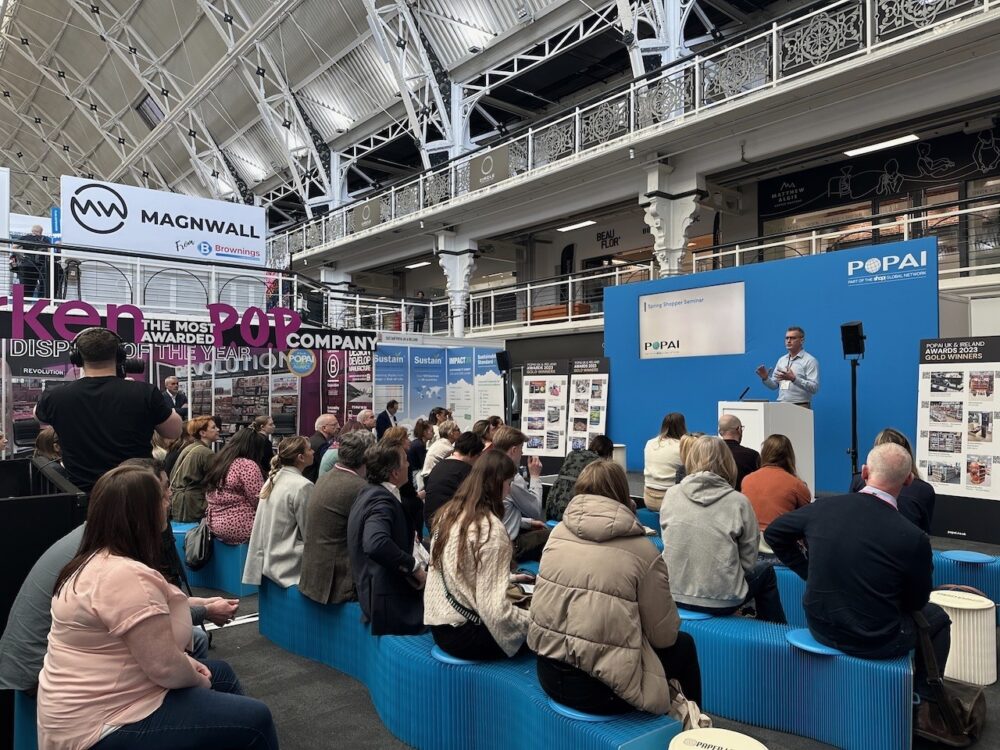
The show will feature more than 100 brands presenting products and services across visual merchandising and retail display, including mannequins, props, graphics, lighting, signage, fabrics and materials, alongside many other specialist solutions used in the creation of physical retail environments. Alongside the exhibition floor, conferences and workshops will explore emerging trends shaping physical retail. The POPAI Zone will also host a programme of conference sessions focusing on shopper marketing, point-of-purchase design and retail activation, providing additional insight from industry specialists.

Director Andrew Colclough has overseen the event for many years, helping establish it as a dedicated platform for the visual merchandising and display sector. With the exhibition now running for over 30 years, it continues to attract professionals from across retail, design and supplier communities.
Ahead of the 2026 edition, 365 Retail spoke to Colclough about the role of visual merchandising in modern retail, the importance of industry collaboration, and what visitors can expect from this year’s show.
Q: For readers who may not have attended before, how would you describe the Visual Merchandising and Display Show?
AC: The VM and Display Show is the UK’s only exhibition dedicated entirely to visual merchandising and retail display, bringing together retailers, designers, visual merchandisers and suppliers who are shaping how products and brands are presented in physical environments.
Importantly, the audience extends well beyond traditional retail roles. We see visitors from hospitality, events, exhibitions, experiential marketing and other creative industries. In many ways the show has become a meeting place for professionalsacross multiple sectors, all exploring how ideas can be communicated through physical spaces.
Q: The show has been running for more than three decades. How has it evolved during that time?
AC: Retail has evolved dramatically over the past 30 years and the show has evolved alongside it. Visual merchandising today is much more integrated into broader strategies around brand storytelling, customer experience and spatial design.
As a result, the show now incorporates a wider range of disciplines. Visitors will see materials, graphics, lighting, technology, and display systems that all contribute to creating engaging environments. It reflects how visual merchandising now sits within a much broader creative landscape.

Q: What can visitors expect from the 2026 edition at the Business Design Centre?
AC: The show takes place on 14–15 April 2026 at the Business Design Centre in London, and it remains free to attend for everyone.
Across the two days visitors will find more than 100 brands presenting ideas, materials and technologies used across visual merchandising and retail display. Alongside the exhibition there will also be workshops and conference sessions, including the programme within the POPAI Zone, which focuses on shopper marketing and point-of-purchase communication.
Q: Why is it important for people in the industry to attend events like this?
AC: One of the most valuable aspects of the show is the opportunity to connect with the wider industry. Visual merchandising, retail design and spatial presentation rely heavily on collaboration, so bringing people together in one place is incredibly important.
Events like this allow professionals to meet suppliers, exchange ideas and see how others are approaching similar challenges. Those conversations often lead to new partnerships, creative collaborations and fresh thinking about how brands are presented in physical environments.
Q: Visual merchandising is often described as retail theatre. How does that influence store design today?
AC: Visual merchandising plays a key role in shaping how customers experience a space. It’s not simply about displaying products; it’s about storytelling and creating environments that encourage people to explore and engage.
Retailers increasingly use display, lighting, materials and graphics to create memorable spaces. When those elements come together effectively they help transform stores into destinations rather than simply places to purchase products.
Q: Sustainability is becoming a major consideration in retail design. Is that reflected in the show?
AC: Sustainability is becoming an important focus across the sector and we’re seeing that reflected in the exhibitors who take part in the show. Many are developing reusable display systems, recyclable materials and modular solutions that can be adapted for different campaigns and environments.
Designers and manufacturers are increasingly looking at the lifecycle of displays and installations, balancing creativity with more responsible approaches to materials and production.
Q: The show works with a range of industry partners. How does that shape the event?
AC: Collaboration with industry organisations is very important. We work closely with trade associations such as POPAI and the Shop and Display Equipment Association (SDEA), as well as leading industry titles such as 365 Retail.
These partnerships help ensure the event reflects the conversations taking place within the sector and brings together a broad range of perspectives and expertise.

Q: What do you think the future holds for visual merchandising and retail display?
AC: As physical spaces continue to evolve, visual merchandising will remain central to how brands engage with customers. We’re seeing a growing emphasis on storytelling, immersive environments and the creative use of materials and technology to shape memorable experiences.
The role of the visual merchandiser is expanding as well. It’s increasingly about shaping the entire environment rather than simply presenting products, which makes the discipline even more important within modern retail and experiential design. Many of these developments will be evident across the stands and conversations at the VM and Display Show this year, giving visitors the opportunity to see first-hand how the industry is responding and where it’s heading next.
Conclusion
The Visual Merchandising and Display Show continues to provide a dedicated platform for professionals working across retail, design and display. Taking place on 14–15 April 2026 at the Business Design Centre in London, the event offers visitors the opportunity to explore new ideas, discover emerging concepts and connect with creatives from across multiple industries.
The show is free to attend, and visitors can secure their place via the official registration page on the VM and Display Show website.
The post Q&A: Andrew Colclough on the VM & Display Show 2026 appeared first on 365 Retail – Retail News and Events.